Have you heard of the Last Ice Merchant of Ecuador? Perhaps you are already as obsessed as I am! Baltazar Ushca has carried his multigenerational tradition of harvesting glacial ice from the heights of Mount Chimborazo in Ecuador. Below are materials to bring Baltazar Ushca’s story to life in the novice and intermediate Spanish classrooms.

The documentary
In 2012, Sandy Patch created a documentary about Baltazar Ushca and his family’s tradition as hieleros. Check out the documentary website here. This beautiful documentary has brought so much joy and cultural connection into my classroom. I hope it does the same for you!
Plans for day 1 of teaching Baltazar’s story
After using Baltazar’s story in my classroom over the past decade, my unit materials have grown immensely. When I first used this documentary in my classroom it was from a short activity from Zachary Jones’s website. If you have never been on the site, enjoy the rabbit hole! The site is full of great resources! Now, I teach Baltazar’s story over a nine day span with a culminating project for students to demonstrate their proficiency growth.
You can purchase my unit materials on my Teachers Pay Teachers account.
To kick off the unit, I build up hype before revealing the documentary with two activities: parallel universe and non-fiction storytelling. Below is the activity progression I use with my 84 minute block Spanish 1 class. If you have shorter classes, wait until day 2 to unveil the documentary. Make them wait for the good stuff!
Day one lesson plans for an 84 minute class period:
| Activity | Materials | Description |
0 – Open Slideshow | Lección 1 slideshow | |
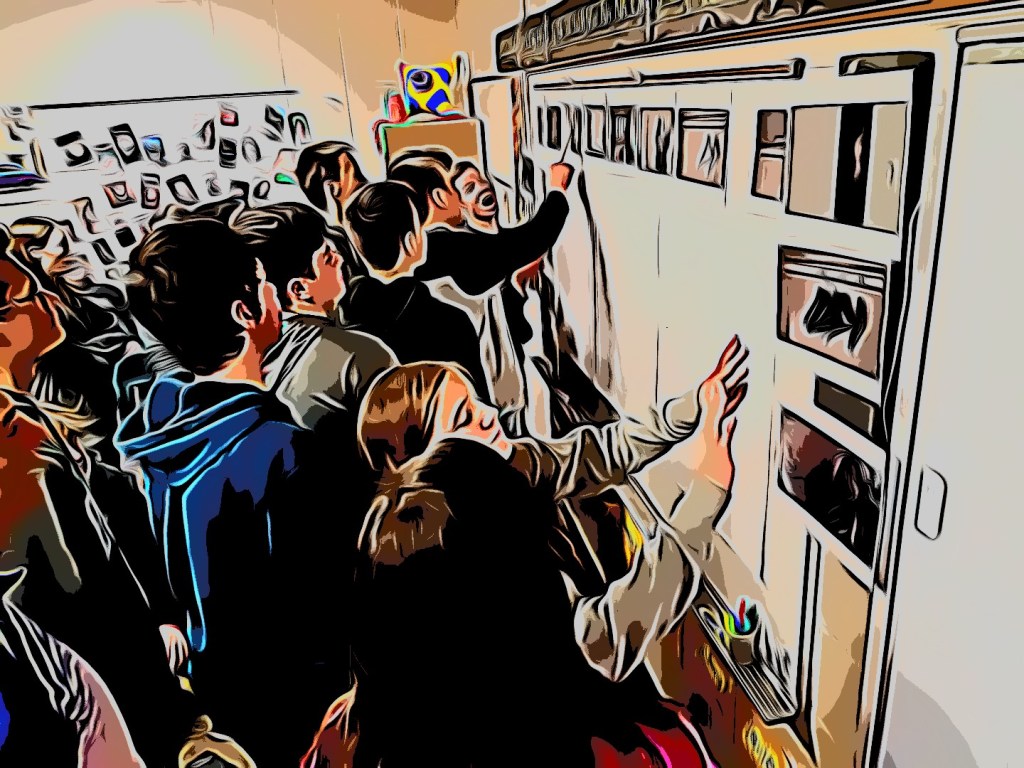
| 1 – Parallel Universe | Still shots from the documentary Parallel Universe Teacher Guide | Students preview still shots from the documentary through a gallery walk. Then, the teacher leads them in using those still shots to create a story that tells what students think may be happening in the images. (See further notes below.) |
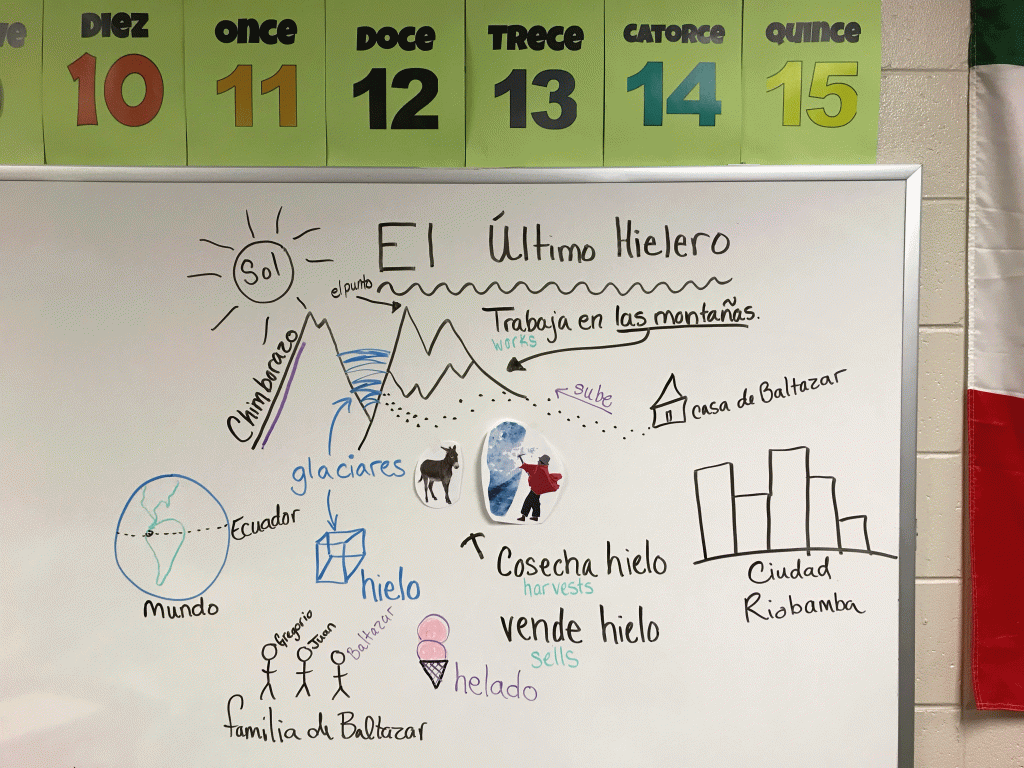
| 2 – Storytelling | El último hielero (Level: Novice Mid) El Último Hielero (Level: Novice High) | Students listen as the teacher tells the true story of “El último hielero” and write down important ideas in their notes, trying to write it in Spanish as much as possible. The teacher should use drawing and circling techniques to make the story comprehensible for the students. (See further notes below.) |
| 3 – Documentary | The Last Ice Merchant (El último hielero) | Students watch the documentary together as a class. |
| 4 – Venn Diagram | Diagrama de Venn | As homework or as a class, students should complete a Venn diagram to show the differences and similarities between their parallel universe story and Baltazar’s story. |
Introducing the story through Parallel Universe
My favorite way to introduce Baltazar’s story is through a Parallel Universe activity. This is a whole class previewing writing task to create an alternative story that will act as a parallel story (universe) alongside the actual storyline.
First, as the teacher, you prep 15 – 20 still shots of the video and place them in the classroom for students to preview. I typically tape the still shots around my whiteboard with space in the middle for crafting our parallel story. Tip: Don’t choose too many images that give away the true story! Leave out a few of the key images.
I learned the Parallel Universe activity from the genius, Sr. Wooly. He explains the process best: Sr. Wooly’s detailed video tutorial. This type of activity takes a little energy to learn, but once you have it down, it is a great way to introduce future videos or graphic novels!
Reveal the true story through Storytelling
Have a white board? Or a document camera? Using the leveled story of el último hielero (see lesson plans above) as your foundation, draw the true story out for your students. I like to have multiple colors of pens or markers to draw students’s attention. Depending on the group or how many cups of coffee I had, I sometimes have English on the board to assist comprehension and sometimes I am able to keep the entire story in Spanish. The first time I drew the story, my drawings were pretty terrible – embrace the bad drawings! Make fun of yourself a little a move on – the bad drawings will help maintain focus for students. I will be teaching this unit again this semester and hope to get a video up here to demonstrate how I tell this story.
Diving deeper
After showing the documentary, students continue to work with the language needed to understand and retell the story of Baltazar through the unit. In my Spanish 1 classroom, this is students first time targeting third person conjugations with an array of verbs. There are many high frequency words that come into play and we complete activities to promote acquisition of these terms. By the end of the unit, students are able to recount the story of Baltazar using language within their proficiency level and get creative to tell a new original story of their own. At this proficiency level there are anticipated errors as students grow to acquire structures such as vive, hay, hace, cosecha, gana, and tiene. Check out all this language acquisition from a Spanish 1 student!
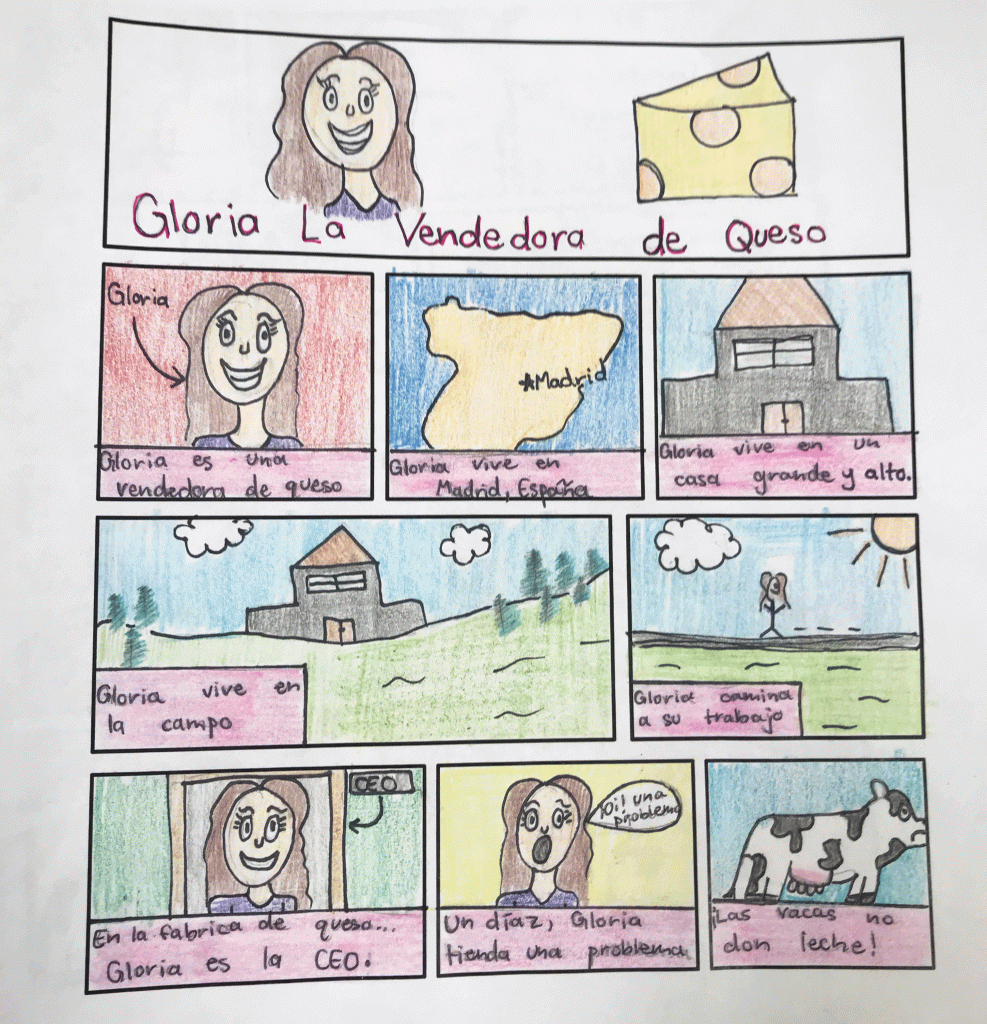
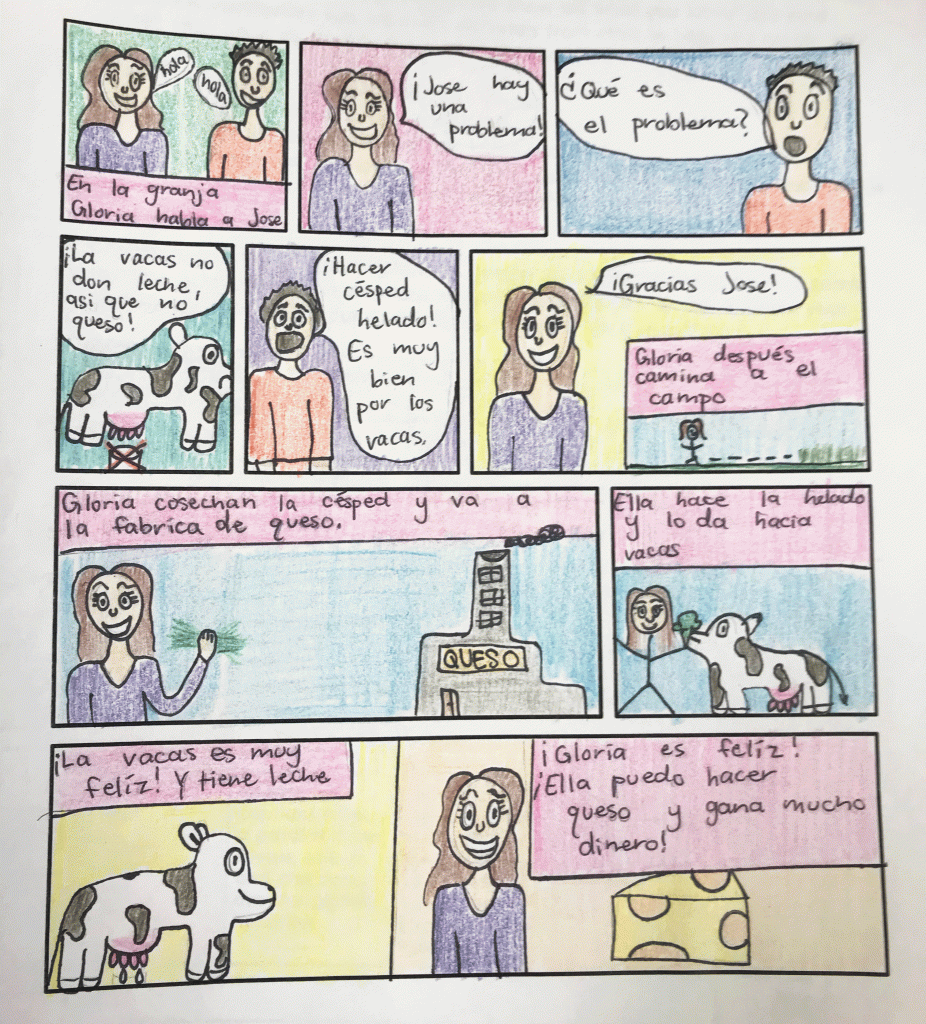
The comic project description, rubric, and comic templates are available for purchase here.
Sincerely hope Baltazar’s story brings joy to your classroom!!
Con cariño,
Natalie Glaze
P.D.
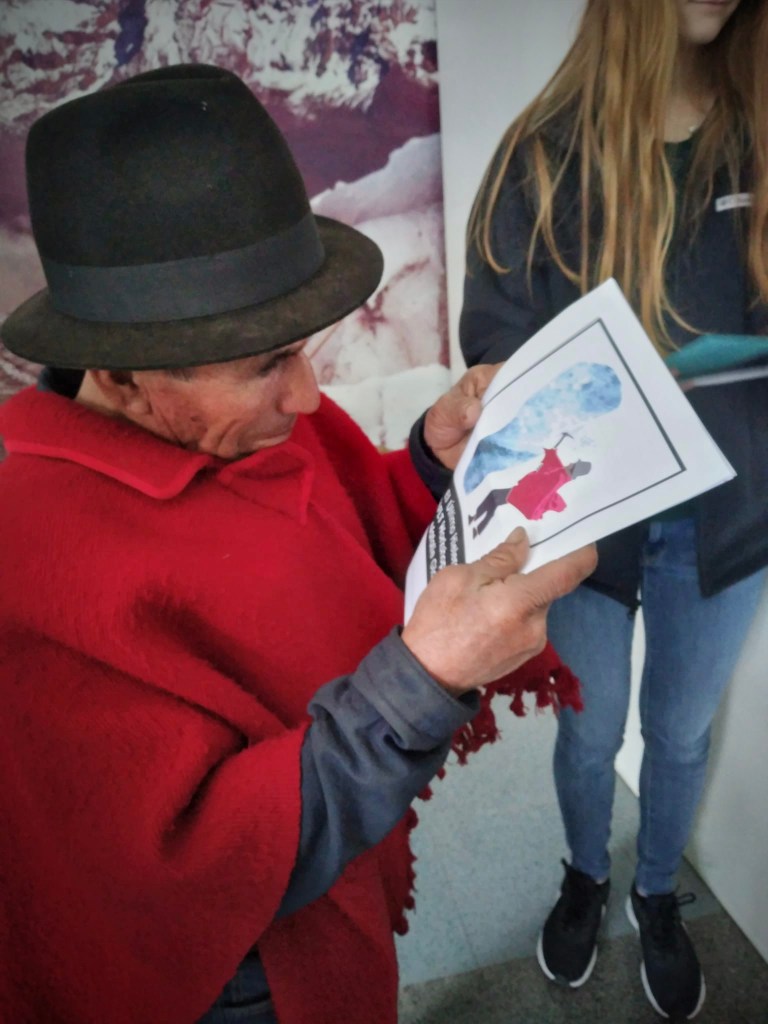
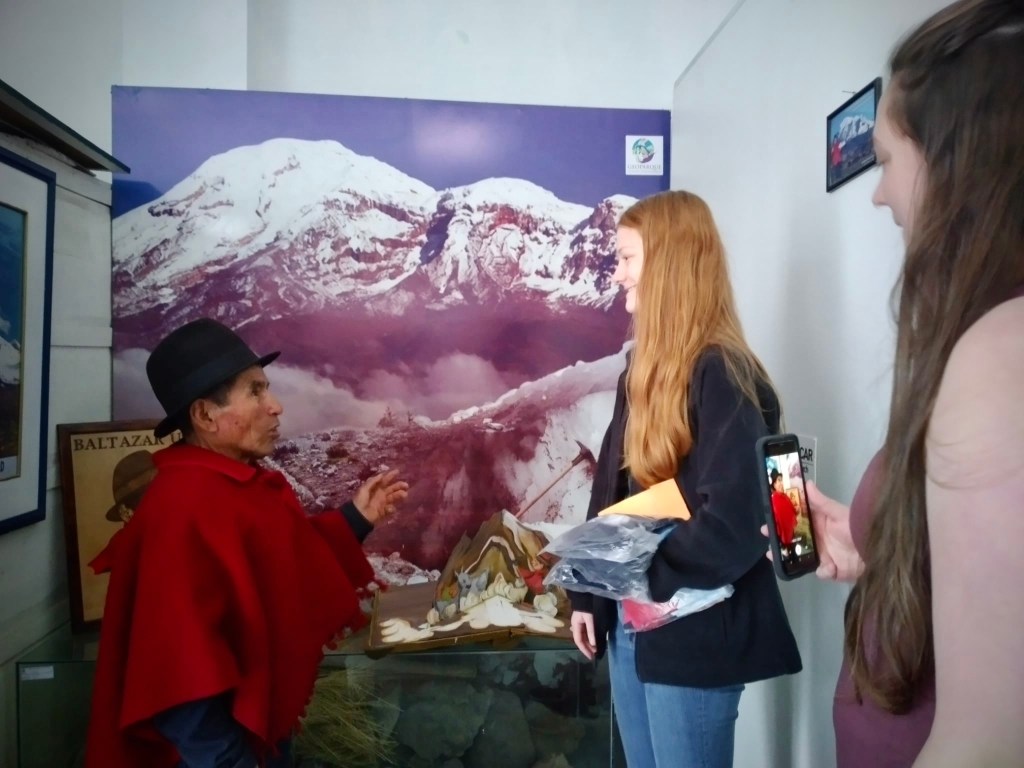
Planning a trip to Ecuador? Go visit Baltazar at his museum in Guano, Ecuador! Pictured below are three of my former student teachers and now established Profes del Norte with Baltazar himself! In December, these lovely ladies brought me to tears as they hand delivered a letter from me to Baltazar, stories I wrote about him and creations from my students as well as stickers of his image. He was so kind and invited them to his house for tea!

 Profes del norte
Leave a comment